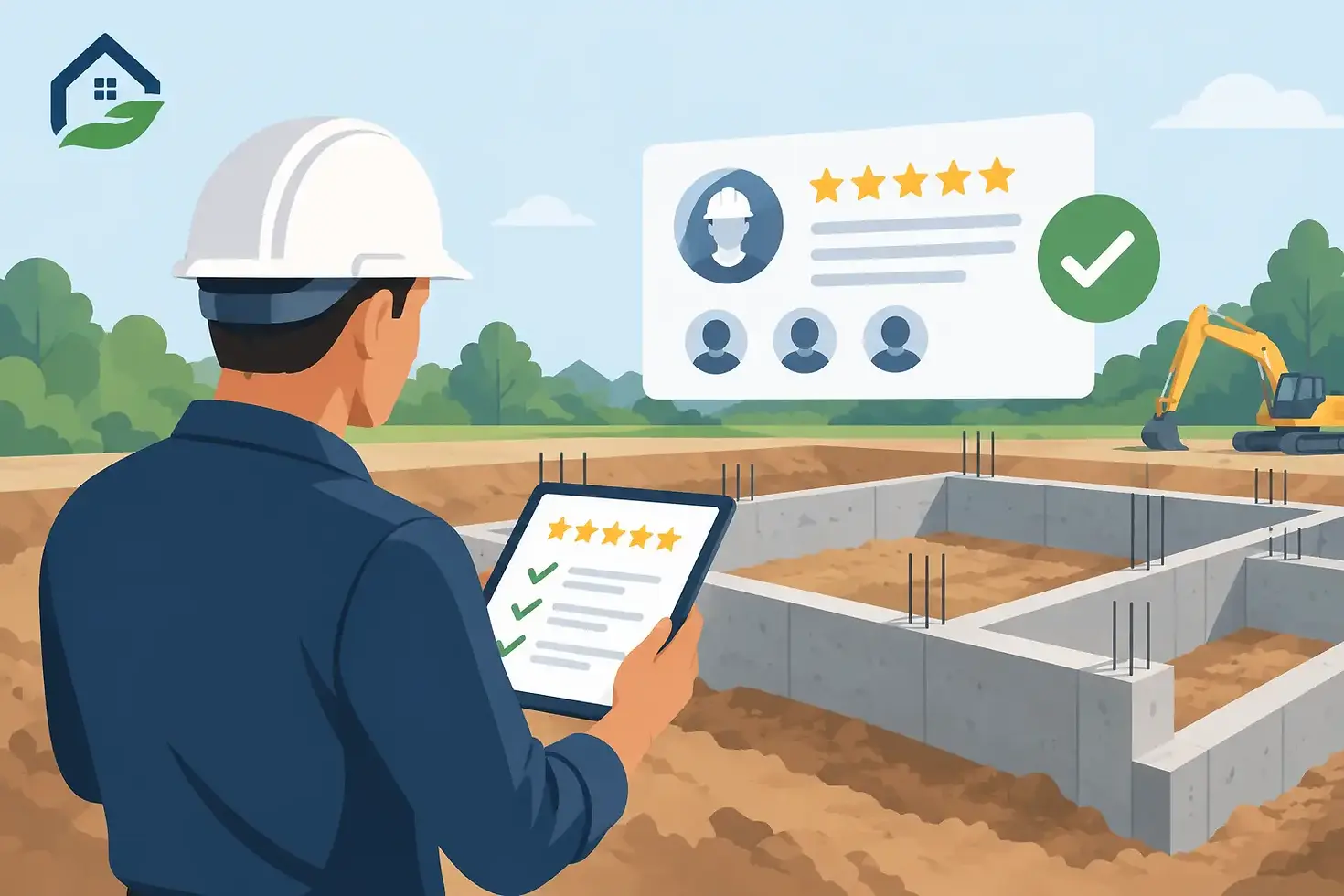
Foundation Contractor Reviews: What to Check
A foundation is not the place to make a decision based on the lowest number or a quick online promise. Foundation contractor reviews can help you narrow the field, but the most useful reviews tell you how a contractor planned the work, communicated during the job, and stood behind the finished concrete.
For a home addition, barndominium, metal building, mobile-home pad, barn, or commercial structure, the foundation has to match the site and the load it will carry. A few careful minutes spent reading reviews and asking the right questions can prevent a costly mistake after the concrete is already poured.
What Foundation Contractor Reviews Should Tell You
A five-star rating is a good starting point, not a final answer. Look past the total score and read the written comments. Specific details are more valuable than short statements such as “great job” or “highly recommended.”
The strongest reviews often mention the type of work completed. A customer may describe a house slab, pier foundation, driveway, horse-barn pour, or site-preparation project. That context matters because a contractor who consistently handles work similar to yours is better prepared to discuss the right approach, timeline, and possible site concerns.
Pay attention to comments about communication as well. Concrete work depends on weather, access, material scheduling, soil conditions, inspections, and coordination with other trades. A dependable contractor should not promise that every project will go exactly as planned. They should explain what can affect the schedule and keep the customer informed when conditions change.
Reviews that mention a clean work area, a respectful crew, accurate measurements, and follow-through are also worth noting. Those details often reflect how a contractor runs the entire job, not just how the concrete looks on pour day.
Look for Project Details, Not Just Praise
Foundation work is specialized. A homeowner reviewing a small patio may be pleased with the service, but that review alone does not prove the crew is the right fit for a large building slab or a foundation that needs piers, grade preparation, reinforcing steel, and coordination with a building plan.
As you read, look for signs that the contractor has experience with projects like yours. For example, a landowner planning a metal building should look for comments that mention building pads, slab preparation, anchor-bolt placement, drainage, and working with metal-building crews. A homeowner planning an addition should look for experience with residential foundations and tying new concrete work into an existing property layout.
In the Brookshire and west Houston area, site conditions can vary from one property to the next. A flat-looking lot may still need dirt work, grading, excavation, fill, or drainage planning before a foundation can be placed correctly. Reviews that mention a contractor identifying an issue early and offering a practical solution can be more meaningful than reviews focused only on price.
Check How the Contractor Handles Problems
Every construction project has variables. Rain can delay a pour. Unexpected soft ground may require more preparation. Utility locations, access limitations, or plan changes can affect the sequence of work. The question is not whether a contractor has ever encountered a problem. The question is how they handled it.
Read lower-rated reviews carefully, too. One unhappy customer does not automatically tell the full story, especially in construction where schedules and site conditions are not always within a contractor’s control. Look for patterns instead. Repeated complaints about missed calls, unexplained charges, poor cleanup, cracked work left unaddressed, or a crew that did not return after payment deserve attention.
Then look at the contractor’s response, if one is available. A professional response should be direct and respectful. It should show a willingness to discuss the issue rather than argue with the customer. Good contractors protect their reputation by addressing concerns in a practical way.
Use Reviews to Build Better Questions
Online feedback should help you prepare for an estimate, not replace one. Once you have identified a contractor with relevant experience and consistent feedback, ask questions that apply to your property.
Start by explaining the purpose of the foundation. Is it for a new home, a shop, a barn, a mobile home, a detached garage, or a commercial building? The intended use affects the design, thickness, reinforcement, site preparation, and finish requirements. If you have plans, survey information, or building specifications, have them ready for the conversation.
Ask the contractor what they see as the main considerations for your site. A good answer should be specific. They may discuss elevation, drainage, soil, accessibility for equipment, the need for a compacted base, reinforcing steel, vapor barriers, piers, or local inspection requirements. The exact answer depends on the project, but a contractor should be able to explain the reasoning in plain language.
It also helps to ask how the timeline will be handled. Find out what needs to happen before work begins, when materials will be scheduled, how weather delays are communicated, and what the site will look like once the crew is finished. Clear expectations are especially important when the foundation is one step in a larger building project.
Compare Estimates the Right Way
A low estimate can be tempting, particularly when several major construction costs are arriving at once. But foundation estimates should be compared by scope, not just by the bottom-line total.
Make sure each estimate addresses the same work. One price may include excavation, grading, forms, reinforcing steel, concrete, finishing, cleanup, and saw cuts, while another may leave out site preparation or base material. A lower number is not a better value if important work is missing from the scope.
You should also understand what is assumed. Is the estimate based on easy access for concrete trucks and equipment? Does it account for demolition or removal of existing concrete? Are permit, engineering, or inspection needs outside the contractor’s scope? There is no single answer for every job, but clear assumptions reduce surprises later.
A contractor who takes time to walk the property and discuss the details may not be the fastest to hand over a number. That extra attention can be valuable when it helps avoid a foundation that is undersized, poorly located, or placed on unprepared ground.
Verify More Than Online Feedback
Reviews are one piece of the hiring process. Before committing, confirm that the contractor is willing to provide a written scope of work and discuss the project in person or by a detailed site review. You should know what is being built, what preparation is included, how payment is structured, and what changes could affect the price or schedule.
Photos of completed work can also help you evaluate experience. Look for projects with straight forms, clean edges, consistent finishes, and work that matches the kinds of structures the contractor says they serve. For larger projects, ask whether they have completed comparable foundations, pads, or site work in the area.
Local experience has practical value. A contractor familiar with Brookshire, Katy, Fulshear, Sealy, Hempstead, and nearby communities understands that rural access, drainage, soil conditions, and building schedules can be different from one property to another. SSConcreteSpecialist approaches each job with that kind of hands-on planning, whether the work involves a residential pad or a larger agricultural or commercial project.
Signs a Review Is Worth Trusting
The most credible reviews usually sound like real project experiences. They include a timeframe, a type of work, a crew interaction, or an outcome the customer can describe. They may mention that the contractor explained a delay, adjusted to a site issue, finished when promised, or left the property in good condition.
Be cautious with reviews that are overly vague, unusually repetitive, or focused entirely on a discount. Price matters, but foundation work is a long-term investment. The better review often explains whether the contractor delivered the promised scope and treated the customer fairly from estimate through completion.
A foundation should give you confidence long after the equipment leaves the property. Use reviews to find contractors with a record of clear communication and quality work, then use a detailed estimate and an honest site conversation to choose the crew that fits your project.


Comments